Suspendisse ullamcorper metus non ipsum sollicitudin, posuere iaculis odio lobortis. Nam at turpis semper augue The quiet hum of an electric motor is becoming the new soundtrack of the modern city, signaling a shift that goes far beyond a simple change in fuel. As we navigate through 2026, electric vehicles (EVs) are fundamentally re-engineering the urban commute by addressing the three greatest friction points of city life: noise, air quality, and the high cost of stop-and-go travel. Unlike the internal combustion engines of the past, which lose massive amounts of energy during idling in heavy traffic, EVs thrive in the rhythmic pause-and-play of the morning rush. Regenerative braking technology allows these vehicles to recapture energy every time they slow down, turning a congested commute into an opportunity to recharge rather than a drain on resources.
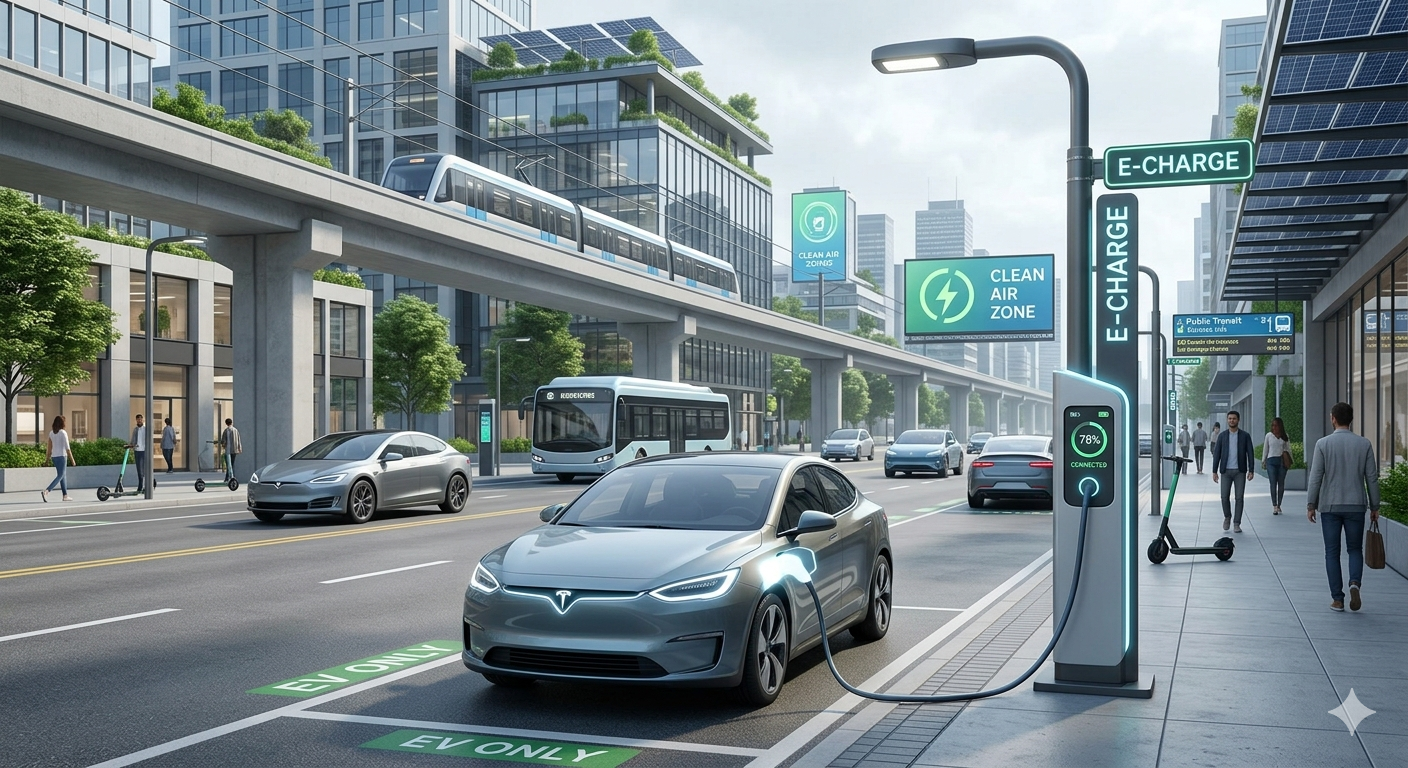
This transition is rewriting the physical blueprint of our neighborhoods. The traditional, pungent gas station is gradually being replaced by “charging hubs” integrated into grocery stores, office complexes, and multi-family housing. In many cities, the curb itself is being digitized; smart lamp posts now double as Level 2 chargers, allowing residents without private garages to participate in the electric revolution. This accessibility is crucial as more automakers introduce mid-range and compact electric models, moving the technology away from being a luxury status symbol and toward a practical tool for the everyday worker.
Beyond individual ownership, the “electric effect” is most visible in the total overhaul of public and corporate transit. City bus fleets are rapidly going silent, significantly reducing the “noise canyons” created by tall buildings that once trapped the roar of diesel engines. For the commuter, this translates to a more peaceful, less stressful journey. Furthermore, the rise of bidirectional charging—where a car can actually feed power back into a home or the city grid during peak demand—is turning the average commuter vehicle into a mobile battery. This creates a more resilient urban energy ecosystem, ensuring that the very cars stuck in traffic during the day are helping stabilize the lights in our homes at night.
The environmental impact is equally transformative, though it has evolved into a more nuanced battle. While tailpipe emissions of nitrogen oxides and CO2 have plummeted in high-adoption zones, urban planners are now pivoting to address non-exhaust pollutants like tire wear and brake dust. Even so, the immediate benefit to street-level air quality is undeniable. As low-emission zones become the standard in metropolitan cores, the future of the urban commute looks less like a frantic, smog-filled race and more like a seamless, integrated flow of clean energy and quiet motion