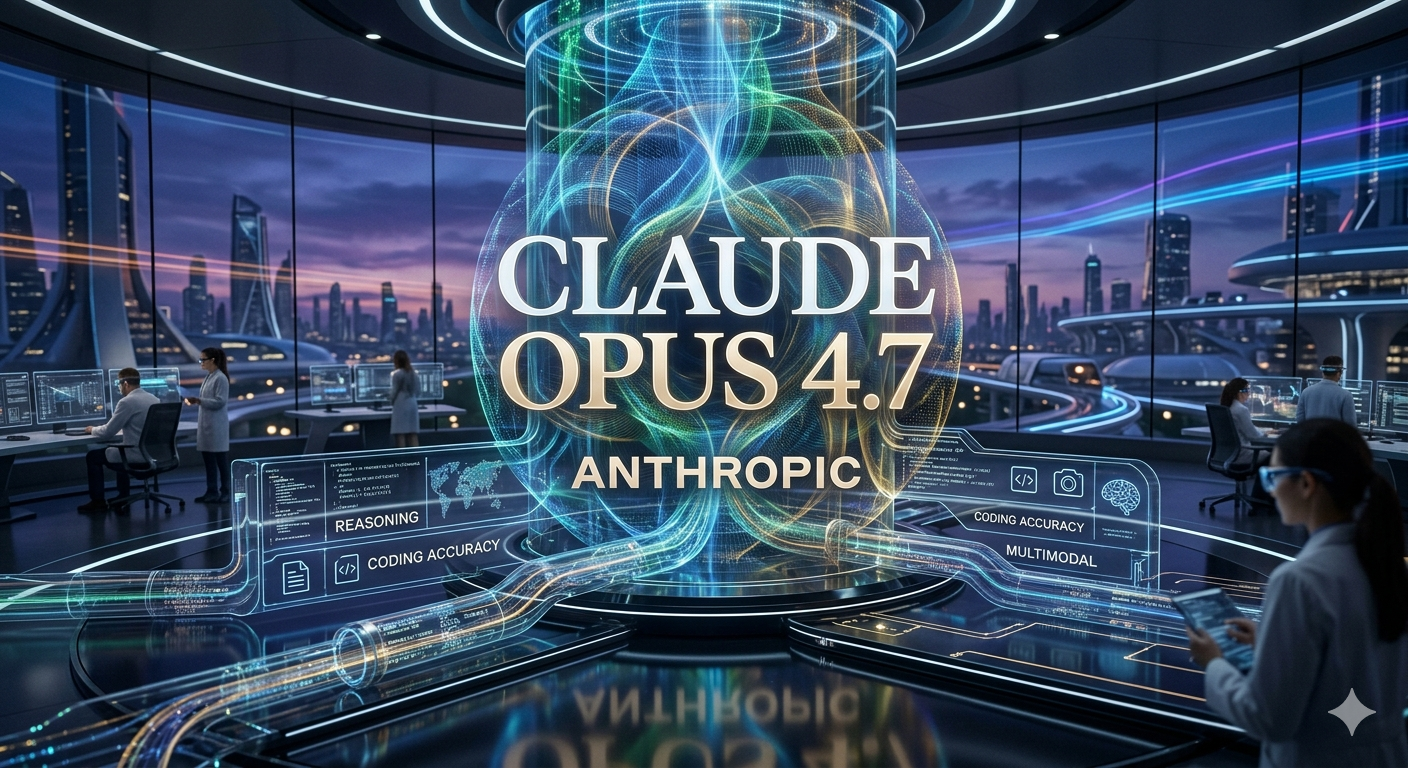
Anthropic has officially rolled out Claude Opus 4.7, claiming significant breakthroughs in reasoning, coding accuracy, and memory retention. This update introduces specialized “cybersecurity safeguards” to prevent the model from being used for malicious software development, while simultaneously enhancing its ability to handle complex multimodal inputs (text, image, and video) in a single prompt.
While the industry has been buzzing with rumors of a “Mythos” model—an internal Anthropic project allegedly deemed “too dangerous” for full release—Opus 4.7 serves as the safe, high-performance bridge. The focus here is reliability in software engineering.
Early testers report that Opus 4.7 has moved beyond simply suggesting code snippets to managing entire repositories with minimal supervision. It addresses the “inconsistency gap” that plagued earlier versions, allowing developers to hand off complex debugging and architectural planning with newfound confidence.
One of the most striking upgrades in 4.7 is its visual processing power. Anthropic has implemented a three-fold improvement in image resolution, allowing the model to process images up to 2,576 pixels.
Why this matters: This isn’t just about clearer photos. This resolution jump allows “Computer Use” agents to read dense screenshots, extract data from hyper-complex medical or engineering diagrams, and execute pixel-perfect tasks on a user’s desktop.
Maintaining its reputation for “Constitutional AI,” Anthropic has integrated specific cybersecurity safeguards into 4.7. While the model is exponentially faster at detecting software vulnerabilities, it includes hard-coded refusals to exploit them. Anthropic’s leadership noted that while the model could theoretically map out unseen internet vulnerabilities, 4.7 is tuned to act as a “shield rather than a sword.”
With pricing remaining steady at $5 per million input tokens, Anthropic is clearly aiming for the enterprise market. By providing a model that is more “agentic”—meaning it can take actions rather than just answer questions—they are positioning Claude as the central nervous system for the next generation of AI-driven startups.
As of today, Claude Opus 4.7 is live for Pro and Team users, with full API deployment rolling out to global regions over the next 24 hours.